-
Iceland’s Diamond Beach — Shards of Light on Black Sand유럽_Europe 2025. 12. 20. 06:16
When our guide said, “Now we’re heading to Diamond Beach,” a small question mark popped up in my mind.
Why “diamond”?
Was it because white rocks glittered? Or because, unlike other black-sand beaches, this one had unusually bright, pale sand?Carrying that curiosity, I stepped onto the dark shore—and found myself holding my breath.
Across the black sand lay large, crystal-clear pieces of ice, shining in the sunlight. They looked like enormous gemstones someone had quietly scattered by hand, as if the ocean had been decorating the beach in secret. In front of that scene—cold ice catching warm light—I understood immediately: the name “Diamond Beach” wasn’t an exaggeration at all.
And then another question arrived.
Where on earth did these diamond-bright ice shards come from?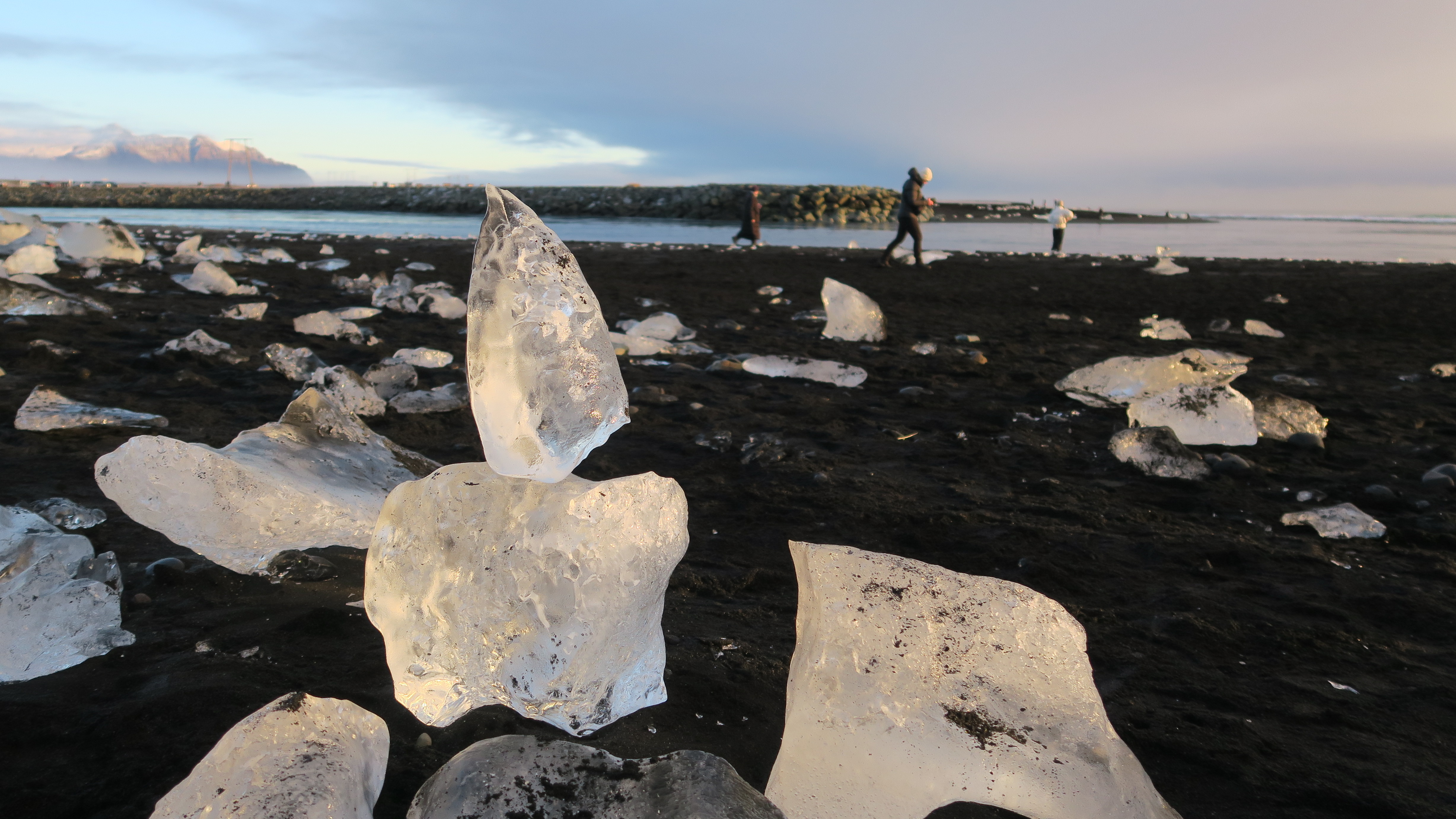
Iceland’s Diamond Beach — Shards of Light on Black Sand A Black Coast Sprinkled with Diamonds
The landscape in my photos is Diamond Beach, on Iceland’s southeast coast, directly across from Jökulsárlón Glacier Lagoon. The area is also known by its geographic name, Breiðamerkursandur.
Here, black volcanic sand (rich in basalt) becomes the perfect stage for something surreal: transparent ice scattered across the shore. When sunlight hits it—especially at low angles—the ice doesn’t just look white. It glows. It glitters. It sparkles.
Standing there, I honestly felt as if I had stepped off Earth for a moment—onto the shoreline of some distant planet.

A Black Coast Sprinkled with Diamonds 1) First Sight — “As If the Sea Had Spilled Its Jewels”
The sun sat low, the wind was sharp, and the air felt as clear as glass.
And then—there it was: the black sand covered in shards of light. Some pieces were wide like tabletops; others were small and sharp-edged, glittering like fragments of glass. Waves would lift the “jewels” for a moment, then pull them back toward the sea, as if the ocean couldn’t decide whether to keep them or return them.Watching that scene, I felt I had entered a museum—one no human had curated, and no designer had decorated. Nature had done everything, effortlessly.
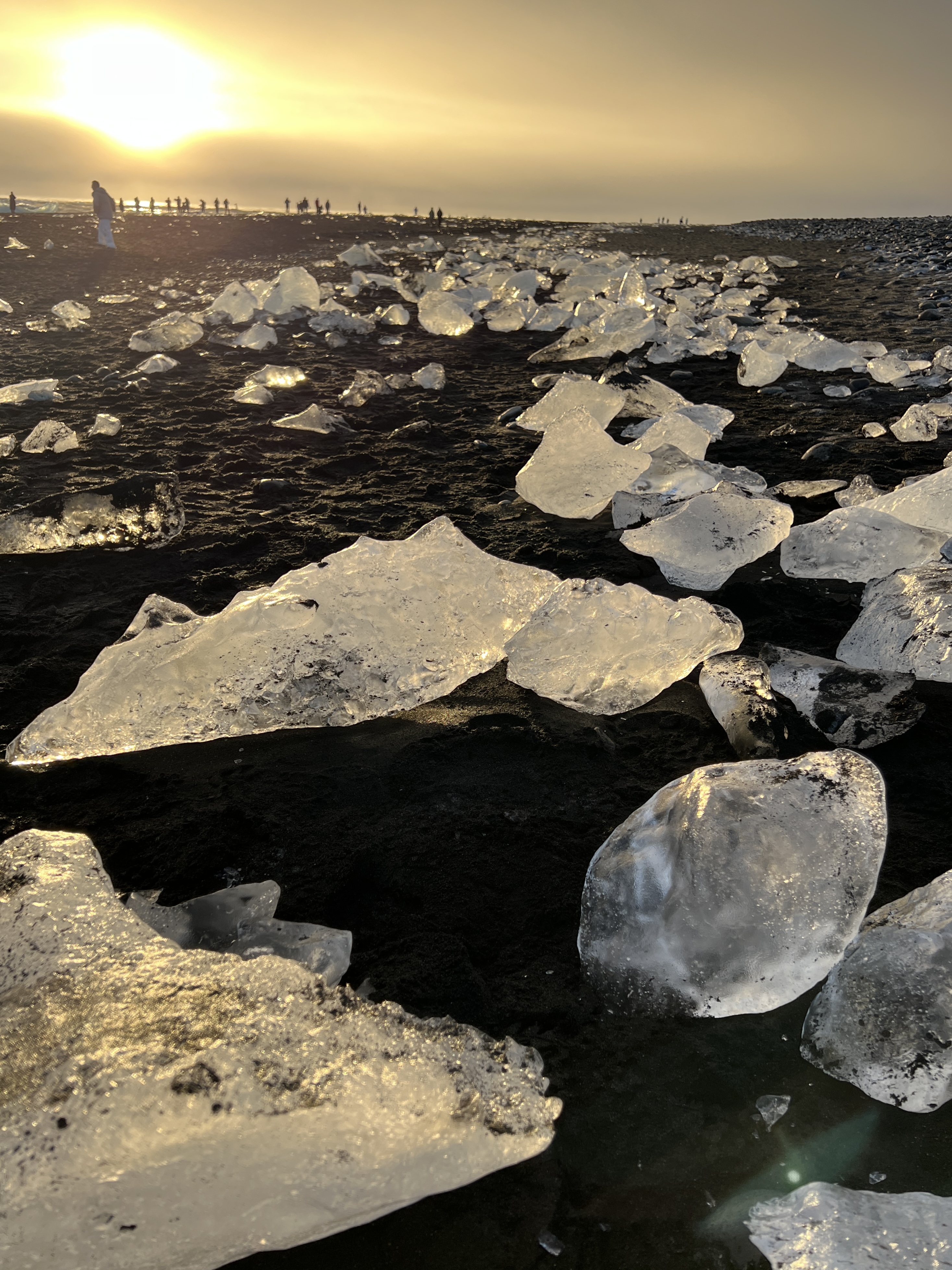
Black sand. Ice diamonds. Golden hour. 2) Why Is There So Much Ice on a Black Beach?
These “diamonds” aren’t snow or hail. They are mostly chunks of icebergs that once floated in Jökulsárlón Glacier Lagoon.
Nearby lies Breiðamerkurjökull, a glacier outlet from the great Vatnajökull ice cap. As the glacier melts and calves, pieces of ice break away and drift into the lagoon. From there, the lagoon connects to the ocean through a narrow channel. Ice travels out to sea—and then the waves and currents push some of it back onto the shore.
That’s why Diamond Beach is never exactly the same.
Yesterday and today may share the same name, but the beach’s “jewelry” is rearranged daily—by water, wind, and time.
Golden light on ice diamonds. 3) The Magic of Contrast
Diamond Beach feels otherworldly not only because of the ice, but because of the contrast:
- black basalt sand from Iceland’s volcanic landscape
- clear ice scattered like crystal
- golden sunlight arriving at a low angle
When these three meet, the ice stops looking like “just ice.” It becomes something closer to cut glass or polished quartz—sometimes glowing yellow, sometimes flashing silver. With every step, the light changes. The beach seems to shimmer as if it’s breathing.
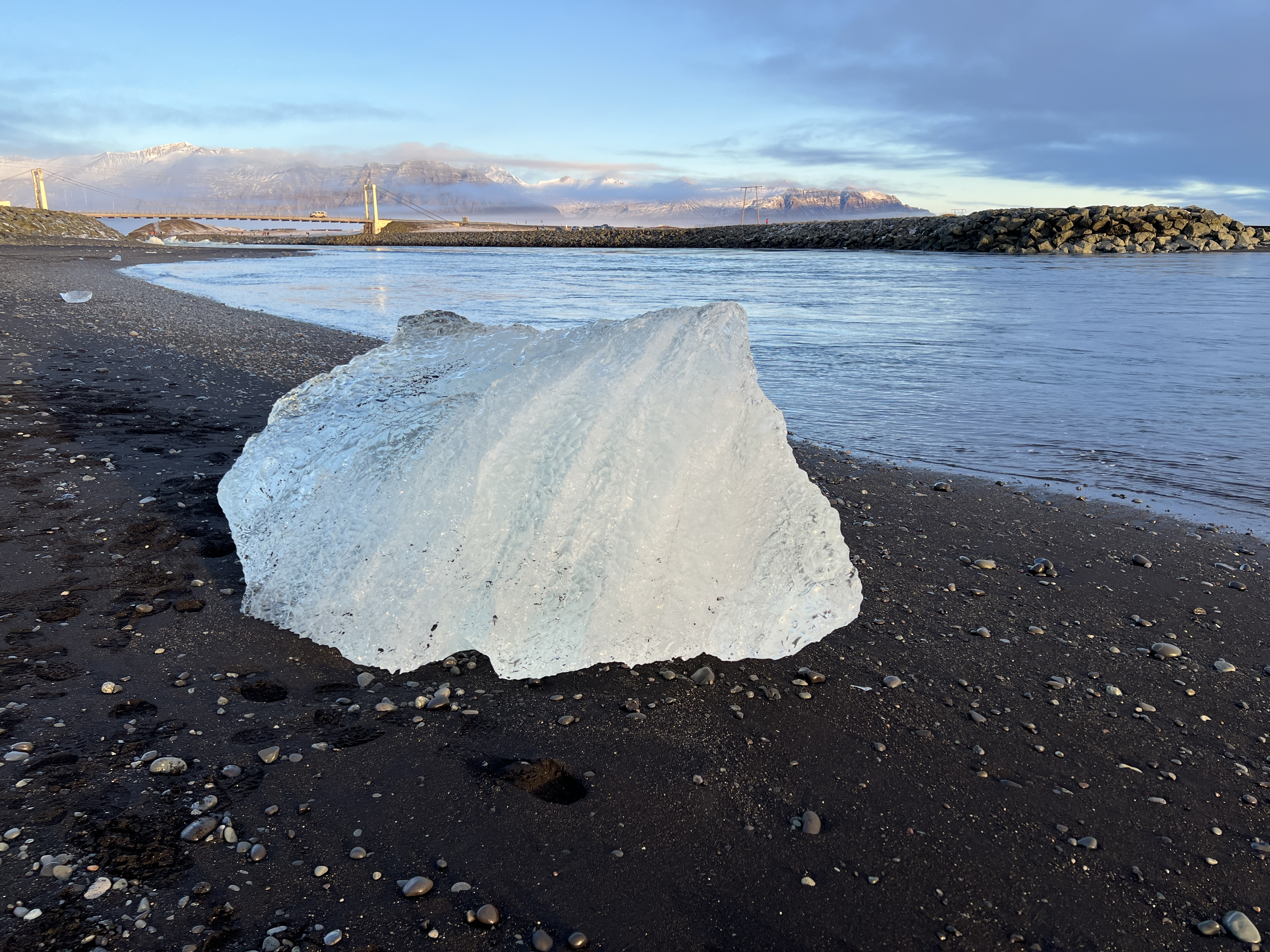
Diamond Beach—an iceberg shard from Jökulsárlón on black sand. 4) Travel Tip — Safety Matters More Than a Photo
Diamond Beach is breathtaking—but it can also be dangerous.
Along Iceland’s south coast, there are sneaker waves: unexpectedly powerful waves that can surge much farther up the beach than you’d think. The sea may look calm for a moment, and then suddenly it isn’t. Our guide warned us repeatedly: never go too close to the water.
Some tourists still wore the expression of “Surely it’ll be fine.” And in that moment I realized: sometimes the greatest danger isn’t the wave itself—it’s the confidence that nothing will happen.
Here are the safety rules worth remembering:
- Don’t turn your back on the ocean, especially near the ice
- Don’t linger near the wet sand line (where waves have just reached)
- Never climb onto ice chunks (they can be slippery or unstable)
- Bring gloves, a hat, and waterproof shoes—the wind can be brutal

One step from wonder, one step from danger. Because one photo is never worth not making it home.
And still—when our guide’s attention drifted for a moment—Ruby, a woman in our group, asked her friend to film her. She waited for the split-second when the water pulled back, then darted forward and jumped onto a wave-washed ice chunk, striking a victorious pose. For that brief moment, it felt like the entire beach held its breath.
But it wasn’t a stunt you can casually repeat. It was a single, narrow window of timing—an all-or-nothing attempt.
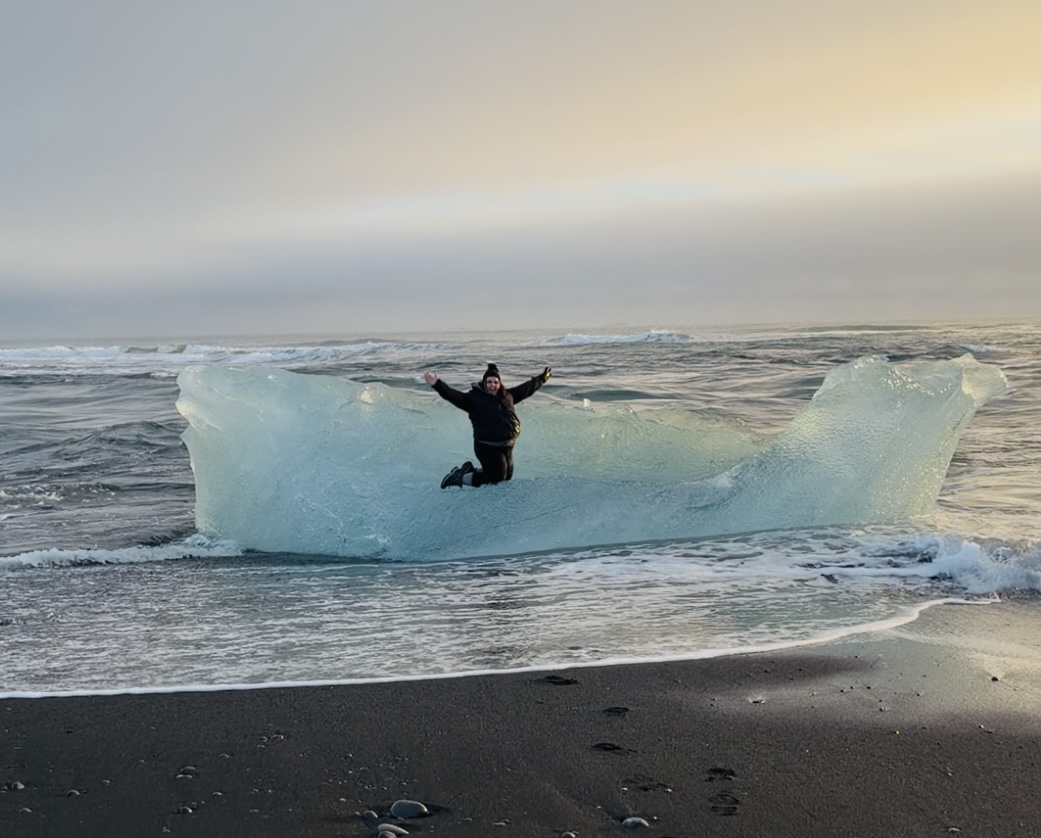
A split-second leap on Diamond Beach. I watched another young Asian tourist manage to climb up, only to freeze there afterward, unable to find the right moment to jump down. For a while he stood trapped on the ice, helplessly scanning the waves, and every surge tightened the air around us. It was frightening to witness—because the border between awe and danger was suddenly visible. On Diamond Beach, one step can be a step into wonder—or a step too close to risk.
And it’s something we shouldn’t forget.5) When Is the Beach Most Beautiful?
- Sunrise / Sunset: Low light makes the ice sparkle the most
- Winter to early spring (roughly Oct–Mar): Ice is often more abundant, and it pairs well with glacier tours
- But this is nature—ice conditions change every day. Sometimes luck is part of the journey.
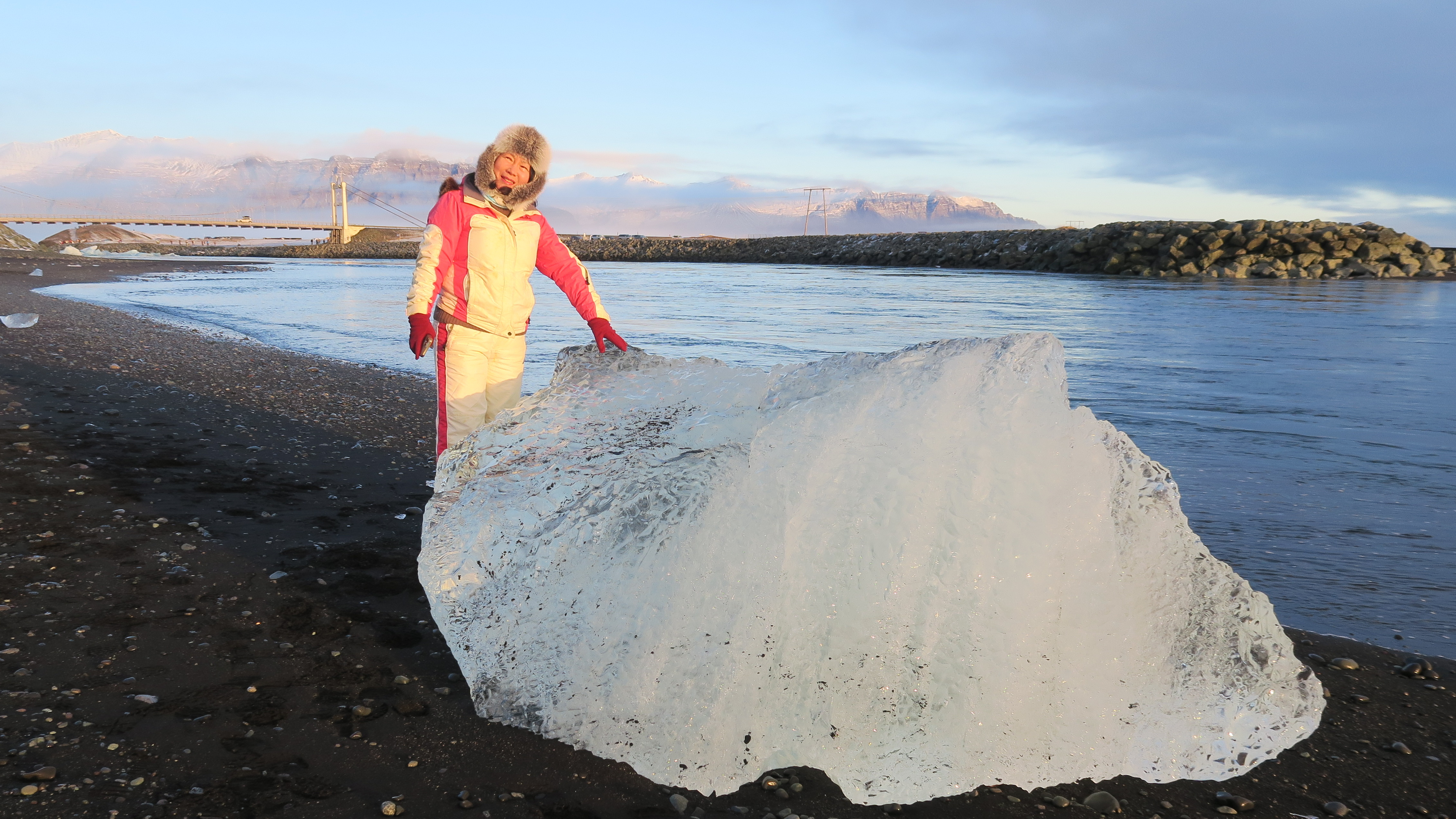
An ice “diamond” on Iceland’s black sand. 6) Places to Pair with Diamond Beach
- Jökulsárlón Glacier Lagoon: The perfect “set” to visit together—lagoon and beach are deeply connected
- Vatnajökull National Park area: A base region for glacier hikes, ice caves, and other winter adventures

Blue ice, wild waves—Diamond Beach. Ice Melts, but Landscapes Stay
Ice will melt. One day these glittering pieces will disappear.
But the light I saw that day—the temperature of the black sand, the ocean’s breathing, the crystal flash of ice under a low sun—stays strangely vivid in my memory.Diamond Beach wasn’t just “beautiful.”
It felt like a stage where nature briefly reveals how it carves time—and lets us watch, for a few quiet minutes, before the waves rearrange everything again.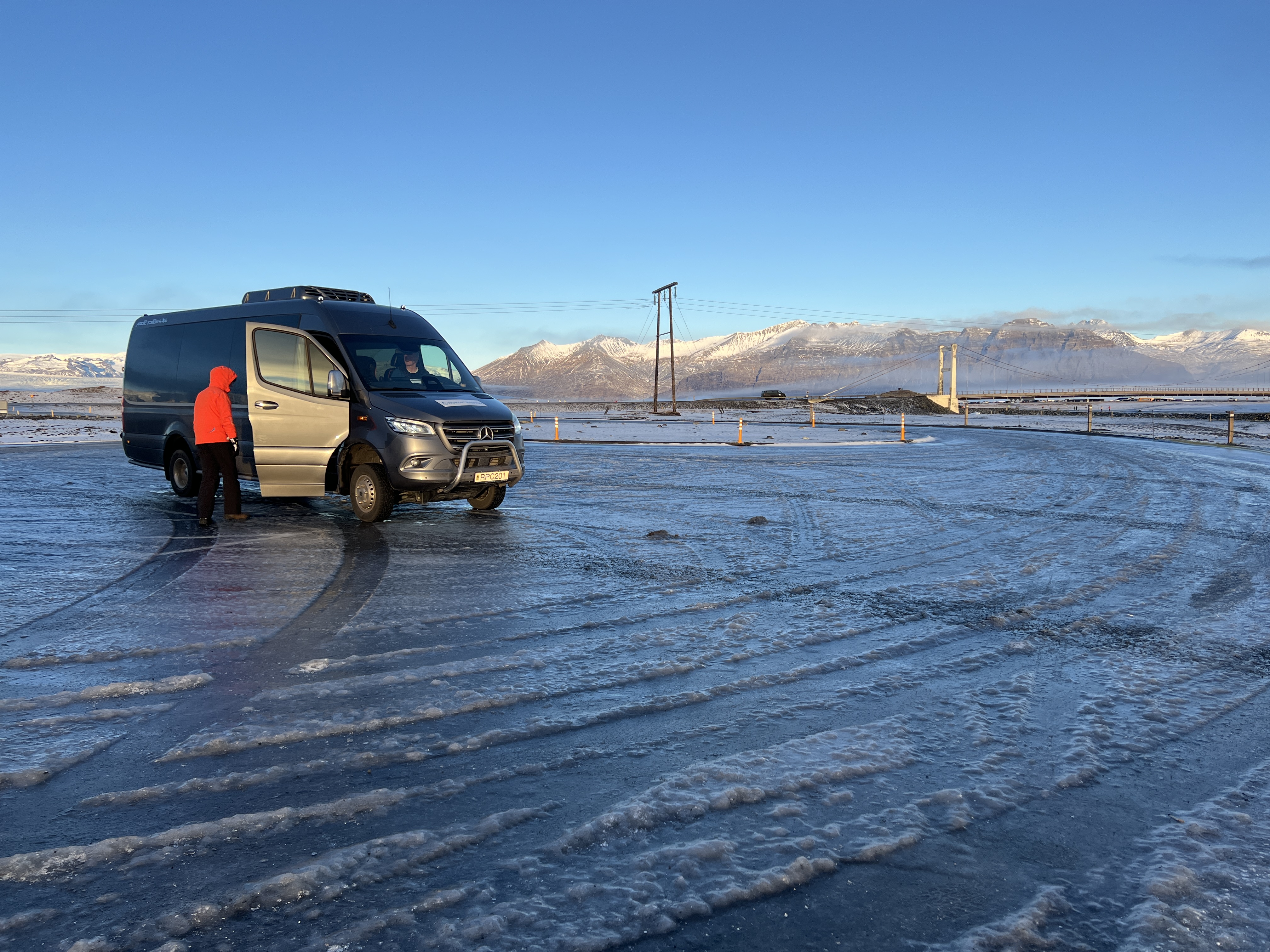
Back in the van—off to our next stop. Memory walks through a landscape, and becomes a story.
— Nomadia83, at the end of a journey#Iceland #DiamondBeach #Jokulsarlon #JokulsarlonGlacierLagoon #Breidamerkursandur #Vatnajokull #VatnajokullNationalPark #BlackSandBeach #GlacierIce #Icebergs #IcelandTravel #SouthCoastIceland #TravelDiary #TravelWriting #NaturePhotography #GoldenHour #SunsetSpot #SneakerWaves #TravelSafety #WinterInIceland
728x90반응형'유럽_Europe' 카테고리의 다른 글
Sky Lagoon vs Blue Lagoon — Which One Is Better? (1) 2025.12.28 스카이 라군 vs 블루 라군, 어디가 더 좋을까? (0) 2025.12.28 아이슬란드의 다이아몬드 비치 — 검은 모래 위에 떨어진 빛의 조각들 (1) 2025.12.19 아이슬란드 남부 — 로마그뉘푸르, 땅이 하늘로 솟아오른 자리 (1) 2025.12.18 아이슬란드 현무암 주상절리 — 비크 레이니스피아라 (1) 2025.12.15